Common Mistakes Businesses Make When Purchasing Printers

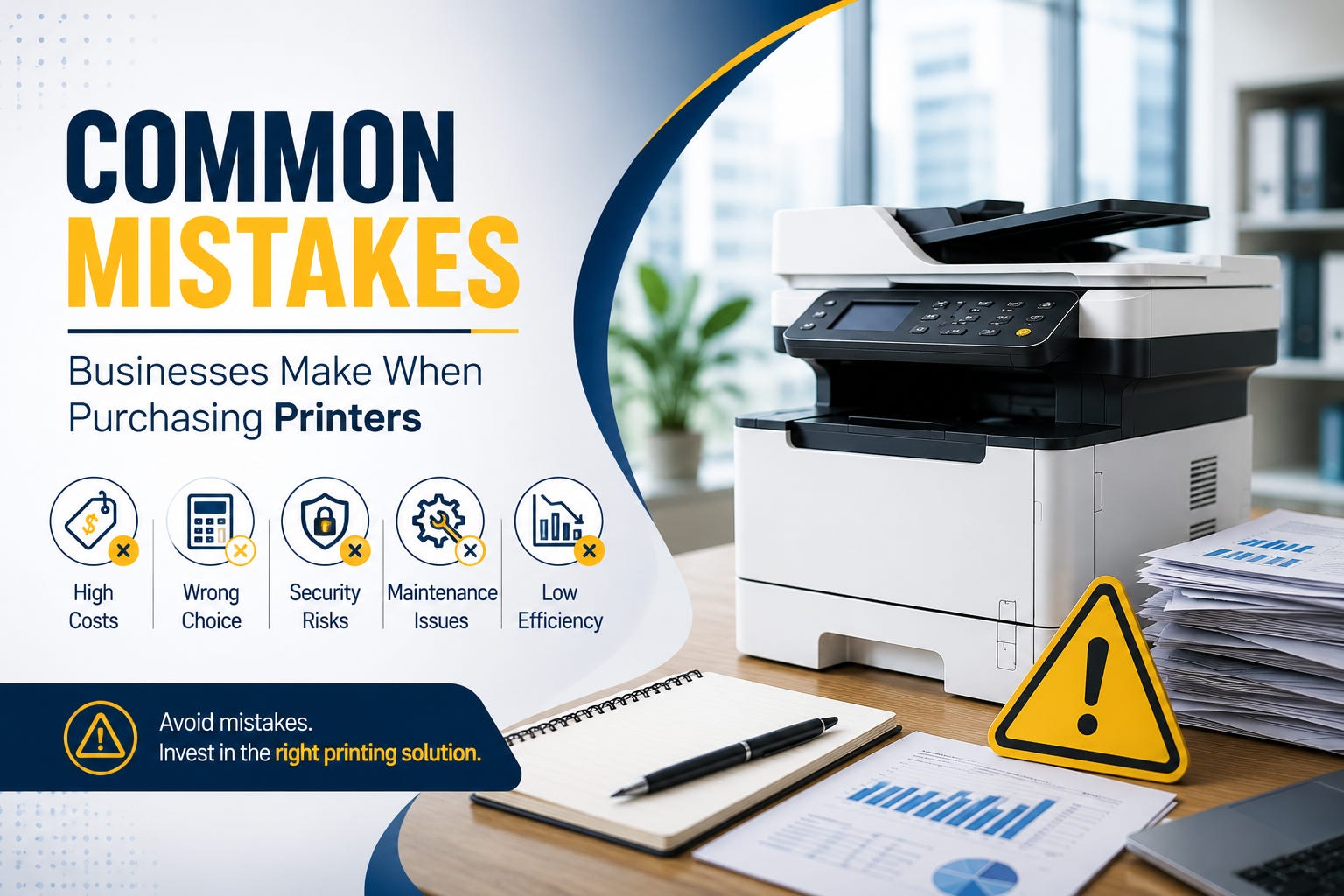
Printers remain an essential part of daily operations for many organizations, supporting everything from invoices and contracts to reports and customer documentation. However, purchasing the wrong printing solution can lead to unnecessary expenses, workflow disruptions, and long-term inefficiencies. Many businesses rely on recommendations from printer suppliers in Dubai, but without a clear procurement strategy, organizations often make costly mistakes that impact productivity and operational performance. Understanding the most common printer purchasing mistakes can help businesses make smarter investments and maximize their return on investment.
Quick Summary
Choosing printers based solely on price often leads to higher long-term costs.
Businesses should assess printing volumes before selecting a device.
Ignoring total cost of ownership can increase operational expenses.
Scalability is essential when planning for future business growth.
Security features are critical for protecting sensitive business data.
Supplier reliability plays a major role in procurement success.
Ongoing maintenance and support should be evaluated before purchase.
Matching printer capabilities to business needs improves efficiency and productivity.
Purchasing Based Solely on Price
One of the most common mistakes businesses make is selecting a printer based entirely on the lowest purchase price. While budget considerations are important, focusing only on upfront costs often results in higher expenses later.
Low-cost printers may have:
Higher maintenance requirements
Increased ink or toner costs
Lower durability
Limited features
Shorter lifespans
Businesses should evaluate overall value rather than simply choosing the least expensive option.
Ignoring Total Cost of Ownership
The purchase price represents only a small portion of the actual cost of operating a printer.
The Total Cost of Ownership (TCO) includes:
Ink or toner expenses
Maintenance costs
Repair requirements
Energy consumption
Replacement parts
Productivity losses due to downtime
A printer with a slightly higher purchase price may provide substantial long-term savings through improved efficiency and lower operating costs.
Choosing the Wrong Printer Type
Not every printer is suitable for every business environment. Purchasing a printer without understanding organizational requirements can lead to performance issues and unnecessary expenses.
Businesses should consider:
Monthly print volume
Color versus monochrome printing
Multifunction requirements
Network connectivity
Document management needs
Matching the printer to actual business requirements helps maximize efficiency while minimizing waste.
Overlooking Future Growth Requirements
Many organizations purchase printers based solely on current needs without considering future expansion.
As businesses grow, they often experience:
Increased print volumes
Additional users
Multiple office locations
Greater document management requirements
Selecting scalable printing solutions helps organizations avoid premature equipment replacements and additional procurement expenses.
Ignoring Security Features
Modern printers are connected devices that can store, process, and transmit sensitive information. Unfortunately, many businesses overlook security when evaluating printing equipment.
Important security features include:
User authentication
Data encryption
Secure print release
Firmware protection
Network security integration
A secure printing environment helps protect confidential business information and reduces cybersecurity risks.
Neglecting Maintenance and Support Services
Printer performance depends heavily on ongoing maintenance and technical support.
Before purchasing a printer, businesses should evaluate:
Warranty coverage
Service agreements
Technical support availability
Replacement part accessibility
Response times for repairs
Reliable support services help minimize downtime and maintain productivity.
Failing to Standardize Printing Infrastructure
Organizations often purchase different printer models for various departments without considering standardization.
This approach can create challenges such as:
Increased maintenance complexity
Additional staff training requirements
Inconsistent user experiences
Higher inventory costs for supplies
Standardizing printing equipment across departments can simplify management and reduce operational costs.
Choosing an Unreliable Supplier
The supplier plays a critical role in ensuring successful printer procurement. A supplier that lacks inventory availability, technical expertise, or responsive support can create unnecessary challenges.
Businesses should look for suppliers that provide:
Consistent product availability
Access to leading printer brands
Technical consultation
After-sales support
Competitive pricing
Working with experienced suppliers helps organizations make informed purchasing decisions and maintain operational continuity.
How Businesses Can Make Smarter Printer Purchasing Decisions
To maximize the value of their investment, businesses should:
Assess actual printing requirements.
Evaluate total cost of ownership.
Prioritize reliability and performance.
Consider future scalability.
Review security capabilities.
Verify warranty and support options.
Standardize printing infrastructure where possible.
Partner with trusted suppliers.
Following these best practices helps organizations improve efficiency while reducing long-term operating costs.
Final Thoughts
Purchasing a printer is more than simply selecting a device that fits within a budget. Businesses must consider long-term operating costs, scalability, security, support services, and overall business requirements to ensure they choose the right solution. By avoiding common procurement mistakes and implementing a strategic purchasing approach, organizations can improve productivity, reduce downtime, and maximize the value of their technology investments.
Companies looking for dependable printing solutions can benefit from working with experienced printer suppliers in Dubai that understand business requirements and provide ongoing support. With access to leading global brands, competitive pricing, and professional procurement guidance, Achiever Computers FZCO helps organizations identify the right printing solutions for their operational needs and long-term growth objectives.
Frequently Asked Questions
Q1: Why is choosing a printer based only on price a mistake?
Low-cost printers often have higher operating costs, increased maintenance requirements, and shorter lifespans, which can result in greater expenses over time.
Q2: What is the Total Cost of Ownership for a printer?
Total Cost of Ownership includes the purchase price, maintenance costs, ink or toner expenses, repairs, energy consumption, and productivity losses related to downtime.
Q3: How can businesses determine the right printer for their needs?
Businesses should evaluate print volume, document requirements, connectivity needs, security features, and future growth plans before making a purchase.
Q4: Why are printer security features important?
Modern printers process sensitive business information. Security features help protect confidential data and reduce cybersecurity risks.
Q5: How does supplier selection impact printer procurement?
A reliable supplier provides product availability, technical expertise, warranty support, and after-sales services that help businesses maintain operational efficiency.
Q6: What should businesses consider before purchasing printers in bulk?
Organizations should assess scalability, total cost of ownership, maintenance requirements, warranty coverage, security features, and supplier reliability to ensure long-term value.